
Compare cars
Pick up to 3 cars to see how they stack up on score, price and specs.
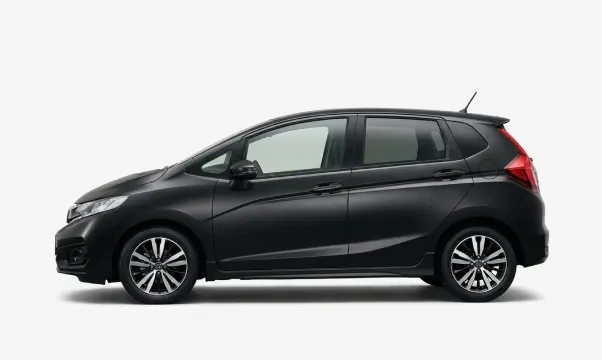
Honda Fit
Incredibly fuel-efficient urban hatchback with Magic Seats and sub-1,500 cc duty savings.
Highest rated
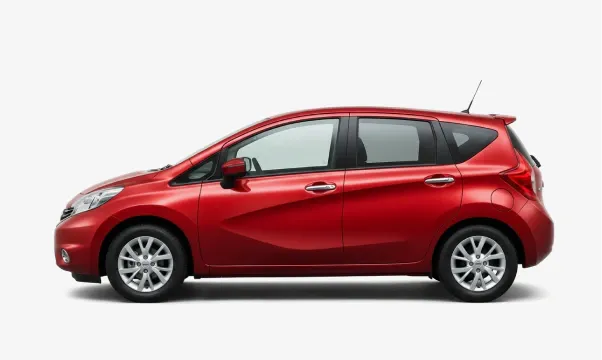
Honda FitNissan Note
Mandai score
8.5/10
7.5/10
Typical price
KSh 1,800,000
KSh 1,500,000
Years
2017-2023
2017-2023
Fuel
Petrol, Hybrid
Petrol, Hybrid
Transmission
Automatic, CVT
Automatic, CVT
Doors
5
5
Most popular trim
Fit 1.3L Home / Fit e:HEV Hybrid Luxe
Note e-Power X / Medalist / Aura e-Power
Dealer listings
None listed
None listed
Fuel and running cost
Trim
Nissan Note e-Power
Fuel consumption
18.5 km/L5.4 L/100km combined · about 740 km a tank
28.0 km/L3.6 L/100km combined · about 1148 km a tank
Running cost
KSh 1,227 / 100 kmKSh 12 a km · KSh 12,268 for 1,000 km · petrol
KSh 811 / 100 kmKSh 8 a km · KSh 8,106 for 1,000 km · petrol
Dimensions
Length
3,990 mm (GK) / 4,040 mm (GR)
4,100 mm
Width
1,695 mm
1,695 mm
Height
1,525 mm
1,520 mm
Wheelbase
2,530 mm
2,600 mm
Ground clearance
145 mm
150 mm
Boot space
304 L (1,205 L folded)
340 L (1,000 L folded)
Kerb weight
1,070 kg (Petrol) / 1,200 kg (Hybrid)
1,220 kg
Seats
5
5
Specifications
Engine
1.3L L13B i-VTEC / 1.5L e:HEV Hybrid
1.2L HR12DE 3-Cylinder + EM57 Electric Motor (e-Power)
Power
100 hp (1.3L) / 109 hp combined (e:HEV)
116 hp (136 hp Aura) electric motor output
Torque
119 Nm (1.3L) / 253 Nm electric motor torque (e:HEV)
280 Nm instant electric torque
Drivetrain
Front-Wheel Drive
FWD or e-4ORCE AWD
0–100 km/h
10.2 sec (1.3L) / 9.4 sec (e:HEV)
7.9 sec
Top speed
180 km/h
150 km/h
Fuel economy
Combined
18.5 km/L (1.3L) / 28.0 km/L (e:HEV Hybrid)
28.0 km/L (e-Power) / 18.0 km/L (1.2L Petrol)
City
15.5 km/L (1.3L) / 26.5 km/L (e:HEV Hybrid)
30.0 km/L (e-Power) / 15.5 km/L (1.2L Petrol)
Highway
21.0 km/L (1.3L) / 29.5 km/L (e:HEV Hybrid)
25.0 km/L (e-Power) / 20.5 km/L (1.2L Petrol)
Tank size
40 L
41 L
CO₂ emissions
98 g/km (Hybrid)
82 g/km
At a glance
Model
Honda Fit (GK3/GK5 & GR1/GR3 Series)
Nissan Note (E12 / E13 Series)
Production years
2017–2023
2017–2023
Body type
5-Door Compact Hatchback
Hatchbacks / Compact MPV
Seating capacity
5
5
Fuel types
Petrol (i-VTEC), Full Hybrid (e:HEV)
Petrol, e-Power Hybrid
Engine sizes
1,317 cc / 1,496 cc
1,198 cc (1.2L e-Power / DIG-S)
Transmission
CVT Automatic / e-CVT
Automatic (CVT / Single-Speed e-Power)
Drivetrain
FWD or Real Time AWD
FWD or e-4ORCE AWD
Ground clearance
145 mm (150 mm Crosstar)
150 mm
Source market
Japan (RHD)
Japan (RHD JDM spec)
Pros and cons
What’s good
- Magic Seat versatility: Rear seat cushions flip up or fold flat to carry tall cargo and bicycles.
- Sub-1,500 cc import duty advantage: Qualifies for KRA's lowest customs tax valuation bracket.
- Exceptional e:HEV fuel efficiency: Delivers up to 28.0 km/L in stop-and-go Nairobi city traffic.
- Instant 280 Nm electric torque: Smooth, rapid acceleration away from Nairobi traffic lights.
- Exceptional 28+ km/L fuel economy: Slashes monthly commuter fuel bills by over 50%.
- Generous rear knee room: Cavernous rear passenger space despite compact 4.1m length.
What’s not so good
- 145 mm ground clearance: Requires slow navigation over steep estate speed bumps when fully loaded.
- Third-generation DCT hybrid recall history: 2014–2016 i-DCD dual-clutch models require transmission software check.
- 150 mm ground clearance: Requires care over tall speed bumps when fully loaded.
- Engine generator sound under heavy hill climbs: 1.2L engine revs up to charge battery during steep ascents.