
Compare cars
Pick up to 3 cars to see how they stack up on score, price and specs.
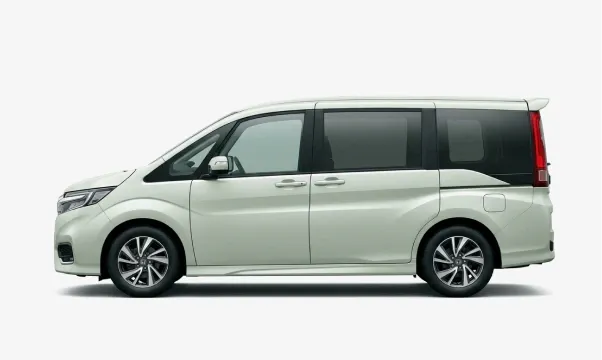
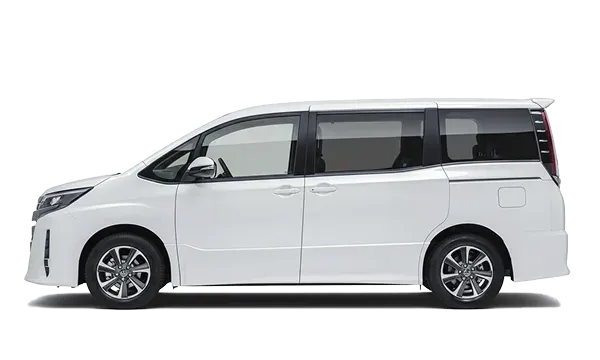
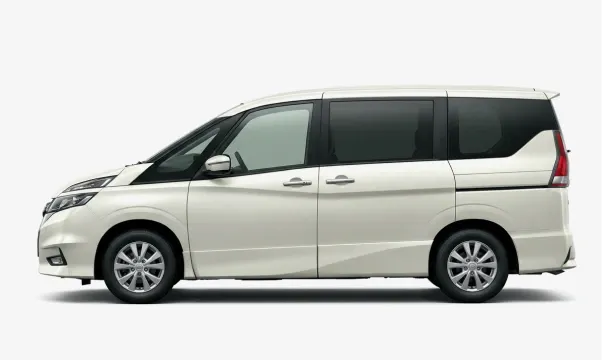
Honda StepwgnToyota NoahNissan Serena
Mandai score
8.5/10
7/10
7/10
Typical price
KSh 2,250,000
KSh 2,400,000
KSh 2,500,000
Years
2015-2023
2017-2023
2017-2023
Body type
Mini Vans
Mini Vans
Mini Vans
Fuel
Petrol, Hybrid
Petrol, Hybrid
Petrol, Hybrid
Transmission
CVT
Automatic
Automatic, CVT
Doors
5
5
5
Most popular trim
Stepwgn Spada Cool Spirit / Spada Hybrid / AIR / SPADA
Noah Si / Hybrid X / S-G
Serena Highway Star V / e-Power Highway Star / Rider
Fuel and running cost
Trim
Stepwgn Spada Hybrid / e:HEV SPADA
Nissan Serena e-Power
Fuel consumption
19.5 km/L5.1 L/100km combined · about 1014 km a tank
14.5 km/L6.9 L/100km combined · about 798 km a tank
26.0 km/L3.8 L/100km combined · about 1430 km a tank
Running cost
KSh 1,164 / 100 kmKSh 12 a km · KSh 11,639 for 1,000 km · petrol
KSh 1,565 / 100 kmKSh 16 a km · KSh 15,652 for 1,000 km · petrol
KSh 873 / 100 kmKSh 9 a km · KSh 8,729 for 1,000 km · petrol
Dimensions
Length
4,690 mm (RP1) / 4,760 mm (Spada) / 4,830 mm (RP6 AIR/SPADA)
4,695 mm (R80) / 4,695 mm (R90)
4,770 mm
Width
1,695 mm (RP1) / 1,750 mm (RP6)
1,695 mm (Standard) / 1,735 mm (Si / S-Z)
1,740 mm
Height
1,840 mm
1,825 mm
1,865 mm
Wheelbase
2,890 mm
2,850 mm
2,860 mm
Ground clearance
150 mm – 155 mm
160 mm
160 mm
Boot space
500 L (3rd row folded flat under floor) / 1,200 L+ cargo
280 L (3rd row up) / 1,100 L (3rd row folded)
Fully expandable 8-seat cargo area
Kerb weight
1,640 kg (1.5T) / 1,820 kg (Spada Hybrid)
1,600 kg
1,670 kg
Seats
7 or 8
7 or 8
7 or 8
Specifications
Engine
1.5L L15B Direct-Injection VTEC Turbo / 2.0L LFB e:HEV Hybrid
2.0L 3ZR-FAE Valvematic Inline-4
1.2L e-Power Hybrid / 2.0L MR20DD S-Hybrid
Power
150 hp @ 5,500 rpm (1.5T) / 184 hp combined (2.0L e:HEV)
152 hp @ 6,100 rpm
136 hp (e-Power electric motor) / 150 hp (2.0L)
Torque
203 Nm @ 1,600–5,000 rpm (1.5T) / 315 Nm (EV Motor)
193 Nm @ 3,800 rpm
320 Nm (e-Power instant torque) / 200 Nm
Drivetrain
Front-Wheel Drive (FWD) or Real-Time 4WD
Front-Wheel Drive / 4WD
FWD or 4WD
0–100 km/h
9.5 sec (1.5T) / 8.6 sec (e:HEV Hybrid)
10.8 sec
10.2 sec
Top speed
180 km/h
175 km/h
160 km/h
Fuel economy
Combined
12.5 – 14.0 km/L (1.5L VTEC Turbo RP1/RP3) / 17.0 – 19.5 km/L (2.0L e:HEV Hybrid RP5)
14.5 km/L (2.0L Petrol) / 23.8 km/L (1.8L Hybrid)
26.0 km/L (e-Power) / 15.0 km/L (S-Hybrid)
City
10.5 – 12.0 km/L (1.5L VTEC Turbo RP1/RP3) / 18.0 – 21.0 km/L (2.0L e:HEV Hybrid RP5)
12.0 km/L (2.0L Petrol) / 22.0 km/L (1.8L Hybrid)
27.5 km/L (e-Power) / 12.5 km/L (S-Hybrid)
Highway
14.5 – 16.5 km/L (1.5L VTEC Turbo RP1/RP3) / 16.0 – 18.0 km/L (2.0L e:HEV Hybrid RP5)
16.8 km/L (2.0L Petrol) / 25.0 km/L (1.8L Hybrid)
24.0 km/L (e-Power) / 17.2 km/L (S-Hybrid)
Tank size
52 L (FWD) / 48 L (4WD)
55 L (Petrol) / 50 L (Hybrid)
55 L
CO₂ emissions
118 g/km (Hybrid) / 152 g/km (1.5T)
115 g/km
102 g/km
At a glance
Model
Honda Stepwgn (RP1–RP5 & RP6–RP8 Series)
Toyota Noah (R80 / R90 Series)
Nissan Serena (C27 / C28 Series)
Production years
2015–2023
2017–2023
2017–2023
Body type
5-Door Mid-Size 7 or 8-Seater MPV
5-Door 7/8-Seater MPV
MPV / Minivan
Seating capacity
7 (Captain seats) or 8 (Bench seat)
7 or 8 seats
7 or 8
Fuel types
Petrol (1.5T), Full Hybrid (2.0L e:HEV)
Petrol, Full Hybrid
Petrol Mild-Hybrid (S-Hybrid), e-Power Hybrid
Engine sizes
1,496 cc (1.5L VTEC Turbo) / 1,993 cc (2.0L e:HEV)
1,797 cc / 1,986 cc
1,198 cc (e-Power) / 1,997 cc (S-Hybrid)
Transmission
CVT (1.5T) / e-CVT (Hybrid)
Super CVT-i / e-CVT
Automatic (CVT / Single-Speed e-Power)
Drivetrain
Front-Wheel Drive (FWD) or Real-Time 4WD
FWD or 4WD
FWD or 4WD
Ground clearance
150 mm (FWD) / 155 mm (4WD)
160 mm
160 mm
Source market
Japan (JDM RHD Spec)
Japan (RHD)
Japan (RHD JDM spec)
Pros and cons
What’s good
- Sub-1,500 cc KRA duty advantage on 1.5T models: 1,496 cc turbo engine qualifies for lower tax valuation baseline.
- Waku Waku Gate innovation: Split rear tailgate allows easy cargo access in tight Nairobi parking spots without lifting the full hatch.
- 3rd-row Magic Seats store completely flat under the floor: Creates an unobstructed flat cargo bed without removing heavy seats.
- Punchy 203 Nm 1.5L Turbo torque: Strong low-rpm acceleration even under full 7-passenger load.
- Massive 7/8-seater cabin space: Ottoman captain chairs and flat floor layout give unmatched passenger comfort.
- Sub-2,000 cc customs tax advantage: Qualifies for KRA's 25% excise duty bracket.
- Outstanding hybrid fuel economy: 1.8L Hybrid achieves up to 23.8 km/L combined.
- Exceptional resale value & liquidity: High demand across private buyers and tour transport operators.
- Cavernous 8-seater versatility: Sliding Smart Multi-Center seat configures walk-through aisle.
- Hands-free dual sliding doors: Foot-sensor activated power doors simplify school drop-offs.
- Sub-2,000 cc KRA tax advantage: 1.2L e-Power and 2.0L S-Hybrid stay under 2.0L threshold.
What’s not so good
- Modest 150 mm ground clearance: Requires cautious driving over steep estate speed bumps and unpaved upcountry roads.
- Waku Waku gate mechanism complexity: Latch sensors require periodic lubrication to ensure smooth operation.
- Boxy profile sensitive to crosswinds: Requires steady steering during high-speed highway driving on open plains.
- Moderate ground clearance: 160 mm clearance requires care over tall speed bumps when carrying 7 adults.
- 160 mm ground clearance: Requires cautious driving over steep drainage dips.
- CVT belt care (S-Hybrid): Demands routine NS-3 fluid replacement.