
Compare cars
Pick up to 3 cars to see how they stack up on score, price and specs.
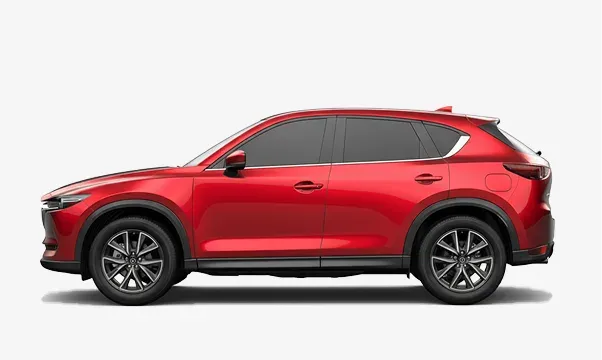
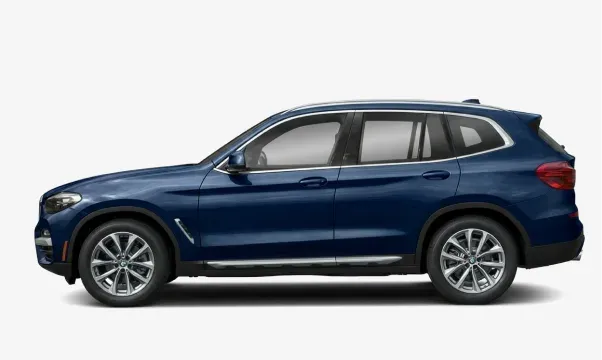
Mazda CX-5BMW X3
Mandai score
7/10
8/10
Typical price
KSh 3,200,000
KSh 4,900,000
Years
2017-2023
2017-2023
Body type
Mid-size SUV
Mid-size SUV
Fuel
Petrol, Diesel
Petrol, Diesel, Plug-in hybrid
Transmission
Automatic
Automatic
Doors
5
5
Most popular trim
CX-5 2.2 XD L Package / 2.0 20S / 2.5 25S
X3 xDrive20d M Sport / xDrive30i M Sport / xDrive30e PHEV
Fuel and running cost
Trim
Fuel consumption
19.5 km/L5.1 L/100km combined · about 1131 km a tank
16.2 km/L6.2 L/100km combined · about 1102 km a tank
Running cost
KSh 1,168 / 100 kmKSh 12 a km · KSh 11,680 for 1,000 km · diesel
KSh 1,406 / 100 kmKSh 14 a km · KSh 14,059 for 1,000 km · diesel
Dimensions
Length
4,550 mm
4,708 mm
Width
1,840 mm
1,891 mm
Height
1,690 mm
1,676 mm
Wheelbase
2,700 mm
2,864 mm
Ground clearance
210 mm
204 mm
Boot space
506 L (1,620 L folded)
550 L (1,600 L folded; 450 L on xDrive30e PHEV)
Kerb weight
1,610 kg
1,750 kg (xDrive20d) / 1,990 kg (xDrive30e PHEV)
Seats
5
5
Specifications
Engine
2.2L SkyActiv-D Twin-Turbo Diesel / 2.5L SkyActiv-G
2.0L B47 Turbo Diesel / 2.0L B48 Turbo Petrol / 3.0L B58 Turbo Inline-6
Power
190 hp (2.2D) / 188 hp (2.5L)
190 hp (20d) / 252 hp (30i) / 292 hp combined (30e PHEV) / 382 hp (M40i)
Torque
450 Nm (2.2D) / 252 Nm (2.5L)
400 Nm (20d) / 350 Nm (30i) / 420 Nm (30e PHEV) / 500 Nm (M40i)
Drivetrain
FWD or i-Activ AWD
Intelligent xDrive AWD
0–100 km/h
8.2 sec
8.0 sec (20d) / 6.3 sec (30i) / 6.1 sec (30e PHEV) / 4.5 sec (M40i)
Top speed
204 km/h
213 km/h – 250 km/h
Fuel economy
Combined
19.5 km/L (2.2D) / 14.5 km/L (2.0L/2.5L)
16.2 km/L (xDrive20d) / 12.8 km/L (xDrive30i) / 41.0 km/L equiv. (xDrive30e) / 10.8 km/L (M40i)
City
16.0 km/L (2.2D) / 11.8 km/L (Petrol)
13.8 km/L (xDrive20d) / 10.2 km/L (xDrive30i) / 45 km EV range (xDrive30e) / 8.5 km/L (M40i)
Highway
22.0 km/L (2.2D) / 16.8 km/L (Petrol)
18.5 km/L (xDrive20d) / 15.0 km/L (xDrive30i) / 16.5 km/L hybrid mode (xDrive30e) / 12.8 km/L (M40i)
Tank size
58 L (FWD) / 56 L (AWD)
68 L (50 L xDrive30e PHEV)
CO₂ emissions
142 g/km
138 g/km (20d) / 49 g/km (30e PHEV)
At a glance
Model
Mazda CX-5 (KF Series)
BMW X3 (G01 Series)
Production years
2017–2023
2017–2023
Body type
5-Door Mid-Size Crossover SUV
5-Door Premium Compact Crossover
Seating capacity
5
5
Fuel types
Clean Diesel, Petrol
Clean Diesel, Petrol, Plug-In Hybrid (PHEV)
Engine sizes
1,997 cc (2.0L) / 2,191 cc (2.2L Diesel) / 2,488 cc (2.5L)
1,995 cc (2.0D) / 1,998 cc (2.0T / 2.0T PHEV) / 2,998 cc (3.0T M40i)
Transmission
6-Speed Automatic
8-Speed Steptronic Automatic
Drivetrain
FWD or i-Activ AWD
Intelligent xDrive AWD
Ground clearance
210 mm
204 mm
Source market
UK / Japan (RHD)
UK / Japan / South Africa (RHD)
Pros and cons
What’s good
- High 210 mm ground clearance handles unpaved roads and potholes easily.
- Sub-2,500 cc KRA import duty tax bracket advantage.
- Massive 450 Nm torque on 2.2L diesel.
- Sub-2,000 cc KRA tax advantage: 2.0L diesel (20d), 2.0L petrol (30i), and 2.0L PHEV (30e) all qualify for KRA's 25% excise tax rate.
- 204 mm ground clearance: Confidently negotiates estate speed bumps, potholes, and unpaved upcountry roads.
- Practical 550 L boot space: Generous cargo capacity expanding to 1,600 L with 40:20:40 split rear seats.
- 16.2 km/L xDrive20d fuel efficiency: Ideal for long-distance highway travel (e.g. Nairobi to Mombasa or Kisumu).
What’s not so good
- Diesel DPF requires low-SAPS C3 oil.
- Firm ride on 19-inch L Package alloy wheels.
- Firm ride on 20-inch M Sport alloys over rough corrugated gravel tracks.
- Reduced boot floor height on xDrive30e PHEV (450 L) due to rear high-voltage battery placement.