
Compare cars
Pick up to 3 cars to see how they stack up on score, price and specs.
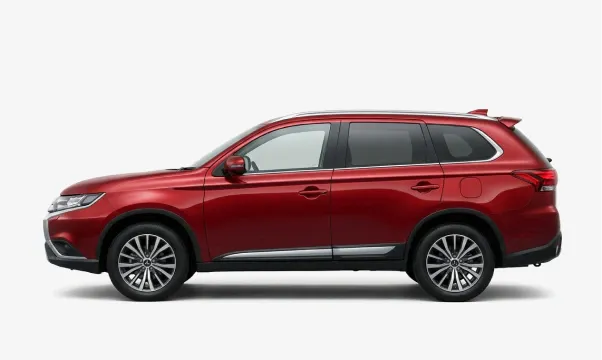
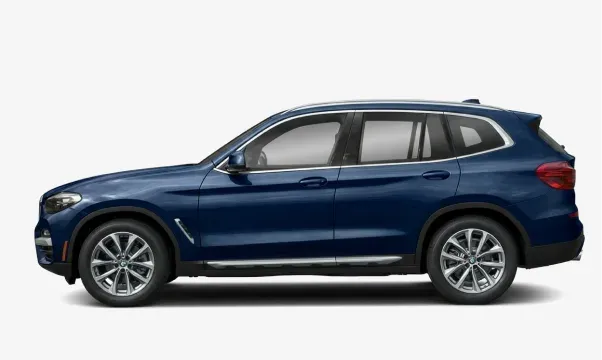
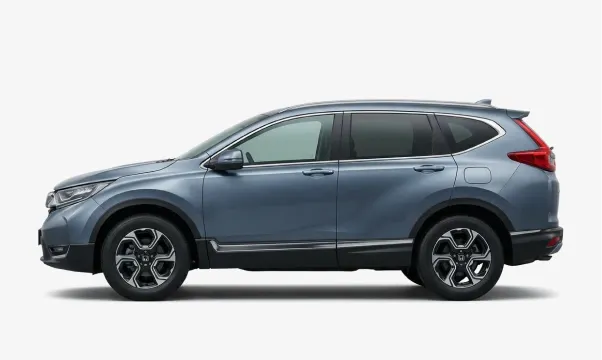
Mitsubishi OutlanderBMW X3Honda CR-V
Mandai score
8/10
8/10
9/10
Typical price
KSh 4,200,000
KSh 4,900,000
KSh 4,500,000
Years
2017-2023
2017-2023
2017-2023
Body type
Mid-size SUV
Mid-size SUV
–
Fuel
Petrol, Plug-in hybrid
Petrol, Diesel, Plug-in hybrid
Petrol, Hybrid
Transmission
Automatic, CVT
Automatic
Automatic, CVT
Doors
5
5
5
Most popular trim
Outlander 2.4 G 7-Seat / PHEV G Premium 5-Seat
X3 xDrive20d M Sport / xDrive30i M Sport / xDrive30e PHEV
CR-V 1.5T EX Masterpiece / 2.0L e:HEV Hybrid
Fuel and running cost
Trim
Fuel consumption
13.5 km/L7.4 L/100km combined · about 810 km a tank
16.2 km/L6.2 L/100km combined · about 1102 km a tank
14.5 km/L6.9 L/100km combined · about 827 km a tank
Running cost
KSh 1,681 / 100 kmKSh 17 a km · KSh 16,812 for 1,000 km · petrol
KSh 1,406 / 100 kmKSh 14 a km · KSh 14,059 for 1,000 km · diesel
KSh 1,565 / 100 kmKSh 16 a km · KSh 15,652 for 1,000 km · petrol
Dimensions
Length
4,695 mm (3rd Gen) / 4,710 mm (4th Gen)
4,708 mm
4,605 mm
Width
1,810 mm (3rd Gen) / 1,862 mm (4th Gen)
1,891 mm
1,855 mm
Height
1,710 mm (3rd Gen) / 1,740 mm (4th Gen)
1,676 mm
1,680 mm
Wheelbase
2,670 mm (3rd Gen) / 2,706 mm (4th Gen)
2,864 mm
2,660 mm
Ground clearance
190 mm (3rd Gen) / 210 mm (4th Gen)
204 mm
208 mm
Boot space
550 L (5-seater PHEV) / 128 L (7-seater expanded to 880 L)
550 L (1,600 L folded; 450 L on xDrive30e PHEV)
561 L (5-seater) / 150 L (7-seater expanded to 967 L)
Kerb weight
1,530 kg (Petrol) / 1,890 kg (PHEV)
1,750 kg (xDrive20d) / 1,990 kg (xDrive30e PHEV)
1,580 kg
Seats
5 or 7
5
5 or 7
Specifications
Engine
2.4L 4B12 MIVEC Petrol / Twin Motor PHEV
2.0L B47 Turbo Diesel / 2.0L B48 Turbo Petrol / 3.0L B58 Turbo Inline-6
1.5L VTEC Turbo / 2.0L-2.4L NA i-VTEC / 2.0L e:HEV Hybrid
Power
169 hp (Petrol) / 221 hp combined (PHEV)
190 hp (20d) / 252 hp (30i) / 292 hp combined (30e PHEV) / 382 hp (M40i)
184 hp to 190 hp (Variant dependent)
Torque
222 Nm (Petrol) / 332 Nm combined (PHEV)
400 Nm (20d) / 350 Nm (30i) / 420 Nm (30e PHEV) / 500 Nm (M40i)
175 Nm to 315 Nm (Electric motor combined torque)
Drivetrain
FWD or Super All-Wheel Control (S-AWC 4WD)
Intelligent xDrive AWD
Real Time AWD / FWD
0–100 km/h
8.2 sec (PHEV) – 9.8 sec (Petrol)
8.0 sec (20d) / 6.3 sec (30i) / 6.1 sec (30e PHEV) / 4.5 sec (M40i)
8.8 sec (1.5T) / 8.6 sec (e:HEV)
Top speed
195 km/h
213 km/h – 250 km/h
200 km/h
Fuel economy
Combined
13.5 km/L (Petrol) / 20.0+ km/L (PHEV Hybrid mode) / 50.0 km/L (PHEV Combined)
16.2 km/L (xDrive20d) / 12.8 km/L (xDrive30i) / 41.0 km/L equiv. (xDrive30e) / 10.8 km/L (M40i)
14.5 km/L (1.5T) / 13.0 km/L (2.0L/2.4L NA) / 21.0 km/L (e:HEV Hybrid)
City
11.2 km/L (Petrol) / 55–80 km pure EV range (PHEV)
13.8 km/L (xDrive20d) / 10.2 km/L (xDrive30i) / 45 km EV range (xDrive30e) / 8.5 km/L (M40i)
12.0 km/L (1.5T) / 10.5 km/L (2.0L/2.4L NA) / 20.0 km/L (e:HEV Hybrid)
Highway
15.8 km/L (Petrol) / 22.0 km/L (PHEV)
18.5 km/L (xDrive20d) / 15.0 km/L (xDrive30i) / 16.5 km/L hybrid mode (xDrive30e) / 12.8 km/L (M40i)
16.8 km/L (1.5T) / 15.5 km/L (2.0L/2.4L NA) / 22.0 km/L (e:HEV Hybrid)
Tank size
60 L (Petrol) / 45 L (PHEV)
68 L (50 L xDrive30e PHEV)
57 L
CO₂ emissions
148 g/km (Petrol) / 40 g/km (PHEV)
138 g/km (20d) / 49 g/km (30e PHEV)
143 g/km (1.5T) / 114 g/km (e:HEV)
At a glance
Model
Mitsubishi Outlander (GF / GG / GN Series)
BMW X3 (G01 Series)
Honda CR-V (RW1/RW2 & RT5/RT6 Series)
Production years
2017–2023
2017–2023
2017–2023
Body type
5-Door 5/7-Seater Crossover SUV
5-Door Premium Compact Crossover
5-Door 5/7-Seater Executive SUV
Seating capacity
5 or 7
5
5 or 7
Fuel types
Petrol, Plug-In Hybrid (PHEV)
Clean Diesel, Petrol, Plug-In Hybrid (PHEV)
Petrol (VTEC Turbo / NA i-VTEC), Full Hybrid (e:HEV)
Engine sizes
1,998 cc / 2,359 cc / 2,488 cc
1,995 cc (2.0D) / 1,998 cc (2.0T / 2.0T PHEV) / 2,998 cc (3.0T M40i)
1,496 cc / 1,993 cc / 2,354 cc
Transmission
CVT Automatic / Fixed Gear (PHEV)
8-Speed Steptronic Automatic
CVT Automatic / Single-Speed e-CVT
Drivetrain
FWD or Super All-Wheel Control (S-AWC 4WD)
Intelligent xDrive AWD
FWD or Real Time AWD
Ground clearance
190 mm (3rd Gen) / 210 mm (4th Gen)
204 mm
208 mm
Source market
UK / Japan (RHD)
UK / Japan / South Africa (RHD)
Japan / UK (RHD)
Pros and cons
What’s good
- Sub-2,500 cc KRA tax bracket savings across all models.
- 50–80 km pure EV zero-emission commuting on PHEV.
- Standard 7-seat layout on petrol variants.
- Sub-2,000 cc KRA tax advantage: 2.0L diesel (20d), 2.0L petrol (30i), and 2.0L PHEV (30e) all qualify for KRA's 25% excise tax rate.
- 204 mm ground clearance: Confidently negotiates estate speed bumps, potholes, and unpaved upcountry roads.
- Practical 550 L boot space: Generous cargo capacity expanding to 1,600 L with 40:20:40 split rear seats.
- 16.2 km/L xDrive20d fuel efficiency: Ideal for long-distance highway travel (e.g. Nairobi to Mombasa or Kisumu).
- Sub-2,500 cc tax bracket advantage: All 1.5T, 2.0L, 2.4L, and Hybrid engines qualify for the lower 25% KRA excise tax rate.
- High 208 mm ground clearance: Easily clears deep potholes, tall speed bumps, and rough upcountry murram tracks.
- Earth Dreams 1.5T climbing torque: Maintains altitude power up the Rift Valley escarpment without sluggishness.
- Optional 7-seater layout: Provides third-row versatility for growing families without stepping up to a large MPV.
What’s not so good
- PHEV is strictly a 5-seater due to rear motor battery pack placement under boot floor.
- CVT rubber-band effect under heavy mountain climbs.
- Firm ride on 20-inch M Sport alloys over rough corrugated gravel tracks.
- Reduced boot floor height on xDrive30e PHEV (450 L) due to rear high-voltage battery placement.
- Firm ride on 18-inch Masterpiece alloys: Transmits minor vibrations on corrugated unpaved roads.
- CVT engine revs on heavy mountain climbs: Non-hybrid CVT holds elevated engine revs during steep highway passes.