
Compare cars
Pick up to 3 cars to see how they stack up on score, price and specs.
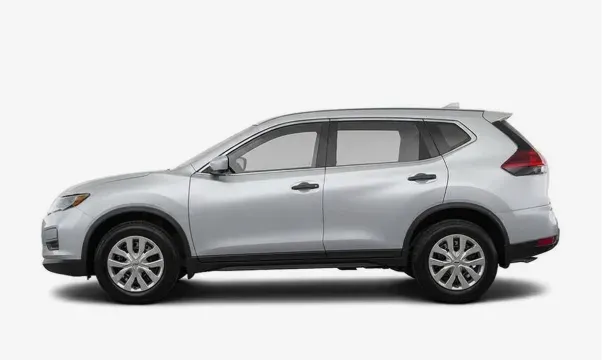
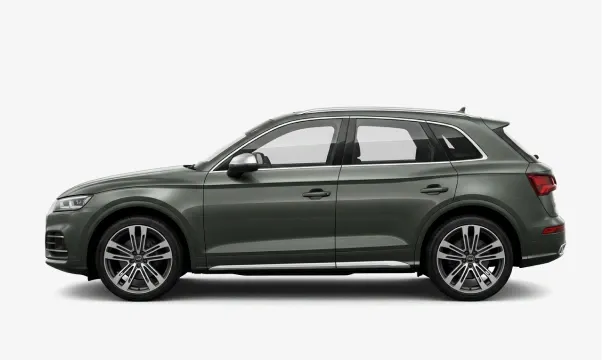
Nissan X-TrailAudi Q5
Mandai score
7/10
8.5/10
Typical price
KSh 3,450,000
KSh 4,800,000
Years
2017-2023
2017-2023
Body type
Mid-size SUV
–
Fuel
Petrol, Hybrid
Petrol, Diesel
Transmission
Automatic, CVT
Automatic
Doors
5
5
Most popular trim
X-Trail 20X 4WD / Hybrid / e-Power e-4ORCE
Q5 2.0 TFSI Quattro S Line
Fuel and running cost
Trim
Nissan X-Trail 2.0L Petrol / e-Power
Fuel consumption
19.8 km/L5.1 L/100km combined · about 1188 km a tank
14.0 km/L7.1 L/100km combined · about 980 km a tank
Running cost
KSh 1,146 / 100 kmKSh 11 a km · KSh 11,463 for 1,000 km · petrol
KSh 1,621 / 100 kmKSh 16 a km · KSh 16,211 for 1,000 km · petrol
Dimensions
Length
4,690 mm
4,663 mm
Width
1,820 mm
1,893 mm
Height
1,740 mm
1,659 mm
Wheelbase
2,705 mm
2,819 mm
Ground clearance
210 mm
208 mm
Boot space
565 L (5-seater) / 135 L (7-seater expanded to 950 L)
550 L
Kerb weight
1,570 kg
1,735 kg
Seats
5 or 7
5
Specifications
Engine
2.0L MR20DD 4-Cylinder Petrol / 1.5L VC-Turbo e-Power
2.0L TFSI Turbo Petrol (45 TFSI)
Power
147 hp @ 6,000 rpm (2.0L) / 213 hp e-4ORCE combined
252 hp @ 5,000–6,000 rpm
Torque
207 Nm @ 4,400 rpm / 330 Nm electric torque
370 Nm @ 1,600–4,500 rpm
Drivetrain
FWD or All-Mode 4x4-i / e-4ORCE AWD
Quattro All-Wheel Drive with Ultra Technology
0–100 km/h
10.5 sec (2.0L) / 7.0 sec (e-4ORCE)
6.3 sec
Top speed
190 km/h
237 km/h
Fuel economy
Combined
16.0 km/L (2.0L) / 19.8 km/L (e-Power)
14.0 km/L (2.0T Petrol) / 18.2 km/L (2.0T Diesel)
City
13.5 km/L (2.0L) / 19.0 km/L (e-Power)
11.5 km/L (2.0T Petrol) / 15.5 km/L (2.0T Diesel)
Highway
18.2 km/L (2.0L) / 20.5 km/L (e-Power)
16.5 km/L (2.0T Petrol) / 20.5 km/L (2.0T Diesel)
Tank size
60 L
70 L
CO₂ emissions
142 g/km
154 g/km
At a glance
Model
Nissan X-Trail (T32 / T33 Series)
Audi Q5 (FY Series)
Production years
2017–2023
2017–2023
Body type
SUV / Crossovers
5-Door Executive Crossover SUV
Seating capacity
5 or 7
5 seats
Fuel types
Petrol, Hybrid (e-Power)
Petrol (TFSI), Clean Diesel (TDI)
Engine sizes
1,497 cc (1.5T e-Power) / 1,997 cc (2.0L MR20DD)
1,984 cc / 1,968 cc / 2,995 cc
Transmission
Automatic (CVT / e-CVT)
7-speed S tronic / 8-speed Tiptronic
Drivetrain
FWD or All-Mode 4x4-i / e-4ORCE AWD
Quattro All-Wheel Drive
Ground clearance
210 mm
208 mm
Source market
Japan / UK (RHD)
Japan / UK (RHD)
Pros and cons
What’s good
- Selectable All-Mode 4x4-i / e-4ORCE: Lockable 4WD mode provides excellent mud and sand traction.
- High 210 mm ground clearance: Easily clears deep ruts and unpaved upcountry tracks.
- Sub-2,000 cc KRA tax advantage: Qualifies for 25% excise duty rate (saving over 3.0L SUVs).
- High 208 mm ground clearance: Easily clears deep potholes, tall speed bumps, and unpaved estate roads.
- Sub-2,500 cc duty advantage: 2.0L engines qualify for KRA's 25% excise duty rate.
- Quattro all-wheel drive traction: Instant torque distribution for wet asphalt and murram roads.
- Audi Virtual Cockpit & Bang & Olufsen audio: Premium 12.3-inch digital cluster and 3D sound system.
What’s not so good
- Third-row legroom: 7-seater third row is best reserved for children or short trips.
- CVT fluid service interval: Xtronic CVT requires genuine NS-3 fluid replacement every 40,000 km.
- S tronic fluid service requirements: Demands genuine Audi dual-clutch fluid replacement every 60,000 km.
- Firm ride on 20-inch S Line wheels: Transmits minor road vibrations on corrugated gravel tracks.