
Compare cars
Pick up to 3 cars to see how they stack up on score, price and specs.
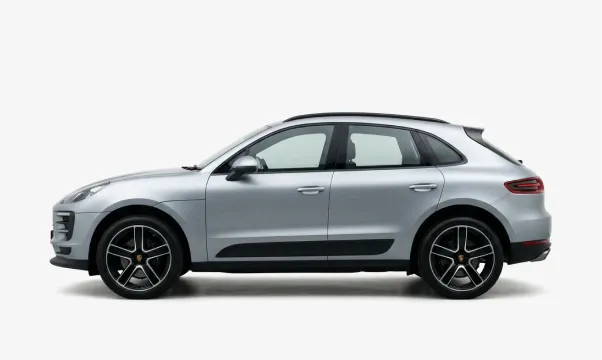
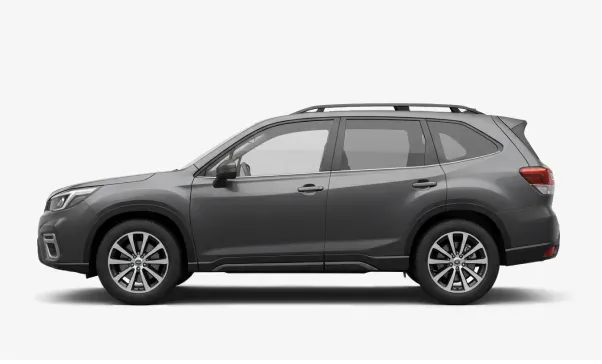
Porsche MacanSubaru Forester
Mandai score
9/10
7/10
Typical price
KSh 7,800,000
KSh 4,200,000
Years
2017-2023
2018-2023
Body type
–
Mid-size SUV
Fuel
Petrol
Petrol, Hybrid
Transmission
Automatic, Dual-clutch
Automatic, CVT
Doors
5
5
Most popular trim
Macan Base / Macan T / Macan S / Macan GTS / Turbo
Forester Touring / Sport / Premium / e-Boxer Advance
Fuel and running cost
Trim
Subaru Forester 2.5L / 1.8T / 2.0L e-Boxer
Fuel consumption
12.2 km/L8.2 L/100km combined · about 793 km a tank
17.0 km/L5.9 L/100km combined · about 1071 km a tank
Running cost
KSh 1,860 / 100 kmKSh 19 a km · KSh 18,603 for 1,000 km · petrol
KSh 1,335 / 100 kmKSh 13 a km · KSh 13,351 for 1,000 km · petrol
Dimensions
Length
4,696 mm
4,625 mm
Width
1,923 mm
1,815 mm
Height
1,624 mm
1,730 mm
Wheelbase
2,807 mm
2,670 mm
Ground clearance
198 mm (up to 230 mm with Air Suspension)
220 mm
Boot space
488 L (1,503 L folded)
520 L (1,775 L folded)
Kerb weight
1,795 kg
1,570 kg
Seats
5
5
Specifications
Engine
2.0L Turbo Inline-4 / 2.9L Twin-Turbo V6 Petrol
2.5L FB25 Direct Injection Boxer / 1.8L CB18 DIT Turbo
Power
252 hp to 440 hp (Variant dependent)
182 hp @ 5,800 rpm (2.5L) / 177 hp (1.8T)
Torque
370 Nm to 550 Nm
239 Nm @ 4,400 rpm (2.5L) / 300 Nm (1.8T)
Drivetrain
Porsche Traction Management (PTM) AWD
Symmetrical All-Wheel Drive (SAWD)
0–100 km/h
4.3 sec (GTS/Turbo) – 6.5 sec (Base)
8.2 sec
Top speed
227 km/h – 272 km/h
204 km/h
Fuel economy
Combined
12.2 km/L (2.0T) / 10.0 km/L (Macan S) / 8.8 km/L (GTS)
14.2 km/L (2.5L) / 15.2 km/L (1.8T) / 17.0 km/L (e-Boxer)
City
10.0 km/L (2.0T) / 8.2 km/L (Macan S) / 7.0 km/L (GTS)
11.8 km/L (2.5L) / 12.5 km/L (1.8T) / 15.0 km/L (e-Boxer)
Highway
14.5 km/L (2.0T) / 12.2 km/L (Macan S) / 10.8 km/L (GTS)
16.8 km/L (2.5L) / 18.0 km/L (1.8T) / 18.5 km/L (e-Boxer)
Tank size
65 L (75 L optional)
63 L
CO₂ emissions
172 g/km
152 g/km
At a glance
Model
Porsche Macan (95B Series)
Subaru Forester (SK Series)
Production years
2017–2023
2018–2023
Body type
Compact Luxury Performance SUV
SUV / Crossovers
Seating capacity
5
5
Fuel types
Petrol
Petrol, e-Boxer Hybrid
Engine sizes
1,984 cc (2.0T) / 2,894 cc (2.9L V6) / 2,997 cc (3.0L V6)
1,795 cc (1.8T CB18) / 1,995 cc (2.0L e-Boxer) / 2,498 cc (2.5L FB25)
Transmission
Automatic (7-Speed PDK Dual-Clutch)
Automatic (Lineartronic CVT)
Drivetrain
Porsche Traction Management (PTM) AWD
Symmetrical All-Wheel Drive (SAWD)
Ground clearance
198 mm (up to 230 mm with Air Suspension)
220 mm
Source market
UK / Japan (RHD)
Japan / UK (RHD)
Pros and cons
What’s good
- Sub-2,500 cc import duty advantage: 2.0T engine qualifies for 25% KRA excise tax rate.
- Shared EA888 engine block: Practical parts sourcing and local maintenance in Nairobi.
- Lightning-fast 7-speed PDK transmission: Instant gearshifts deliver true Porsche sports car feel.
- Class-leading 220 mm ground clearance: Conquers deep potholes, tall speed bumps, and rough upcountry tracks.
- Symmetrical AWD with Dual X-Mode: Exceptional mud, snow, and deep gravel traction.
- Sub-2,500 cc KRA tax advantage: All 1.8T, 2.0L, and 2.5L engines qualify for 25% excise tax rate.
What’s not so good
- Firm sports-tuned ride on 20-inch wheels: Transmits road texture over unpaved corrugated tracks.
- Compact rear legroom: Rearest cabin space best suited for medium-height adult passengers.
- Lineartronic CVT response: CVT engine revs during heavy highway mountain passes.
- EyeSight windshield camera care: Requires specialized recalibration if windscreen is replaced.