
Compare cars
Pick up to 3 cars to see how they stack up on score, price and specs.
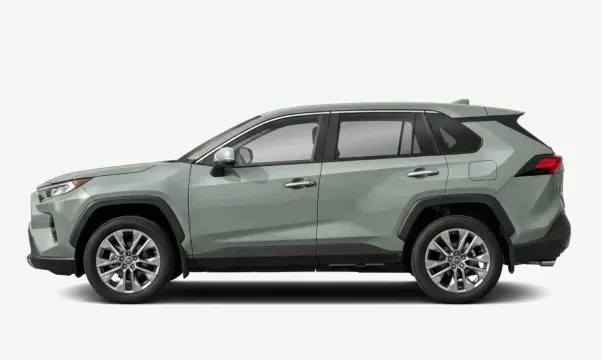

Toyota RAV4Mitsubishi RVR
Mandai score
9/10
6/10
Typical price
KSh 4,800,000
KSh 2,100,000
Years
2019-2023
2017-2023
Body type
Mid-size SUV
Compact Hatchbacks
Fuel
Petrol, Hybrid
Petrol
Transmission
Automatic, CVT
Automatic
Doors
5
5
Most popular trim
RAV4 2.0 Adventure / 2.5 Hybrid G / Limited E-Four
RVR G / Black Edition
Fuel and running cost
Trim
Fuel consumption
15.2 km/L6.6 L/100km combined · about 836 km a tank
15.2 km/L6.6 L/100km combined · about 958 km a tank
Running cost
KSh 1,493 / 100 kmKSh 15 a km · KSh 14,932 for 1,000 km · petrol
KSh 1,493 / 100 kmKSh 15 a km · KSh 14,932 for 1,000 km · petrol
Dimensions
Length
4,600 mm (Adventure: 4,610 mm)
4,365 mm
Width
1,855 mm (Adventure: 1,865 mm)
1,770 mm
Height
1,685 mm
1,630 mm
Wheelbase
2,690 mm
2,670 mm
Ground clearance
200 mm
195 mm
Boot space
580 L (1,690 L folded)
419 L (1,219 L with rear seats folded)
Kerb weight
1,570 kg (1,680 kg Hybrid)
1,370 kg
Seats
5
5
Specifications
Engine
2.0L M20A-FKS Dynamic Force / 2.5L A25A-FXS Hybrid
1.8L 4J10 MIVEC SOHC 16-Valve Inline-4
Power
171 hp (2.0L) / 222 hp combined (2.5L Hybrid E-Four)
139 hp @ 6,000 rpm
Torque
207 Nm (2.0L) / 221 Nm (2.5L Hybrid)
172 Nm @ 4,200 rpm
Drivetrain
Front-Wheel Drive / Dynamic Torque Vectoring AWD / E-Four
Front-Wheel Drive or 4WD (2WD / 4WD Auto / 4WD Lock)
0–100 km/h
8.1 sec (2.5L Hybrid) / 9.5 sec (2.0L)
10.5 sec
Top speed
200 km/h
188 km/h
Fuel economy
Combined
15.2 km/L (2.0L Petrol) / 21.0 km/L (2.5L Hybrid)
15.2 km/L (1.8L FWD) / 13.8 km/L (2.0L 4WD)
City
12.8 km/L (2.0L Petrol) / 20.0 km/L (2.5L Hybrid)
12.8 km/L (1.8L FWD) / 11.2 km/L (2.0L 4WD)
Highway
17.5 km/L (2.0L Petrol) / 22.0 km/L (2.5L Hybrid)
17.5 km/L (1.8L FWD) / 16.0 km/L (2.0L 4WD)
Tank size
55 L
63 L (FWD) / 60 L (4WD)
CO₂ emissions
138 g/km (2.0L) / 102 g/km (Hybrid)
152 g/km
At a glance
Model
Toyota RAV4 (XA50 Series)
Mitsubishi RVR (GA4W Series)
Production years
2019–2023
2017–2023
Body type
5-Door Compact Utility Crossover
5-Door Compact Crossover SUV
Seating capacity
5
5 seats
Fuel types
Petrol (Dynamic Force), Full Hybrid (THS-II)
Petrol (MIVEC)
Engine sizes
1,986 cc (2.0L M20A-FKS) / 2,487 cc (2.5L A25A-FXS Hybrid)
1,798 cc (1.8L) / 1,998 cc (2.0L)
Transmission
Direct Shift-CVT / e-CVT
INVECS-III 6-Speed Sport Mode CVT
Drivetrain
FWD or Dynamic Torque Vectoring AWD / E-Four
FWD or Electronically Controlled 4WD
Ground clearance
200 mm
195 mm
Source market
Japan / UK (RHD)
Japan (RHD)
Pros and cons
What’s good
- Modern TNGA platform entry: Superior chassis rigidity, sharp handling, and excellent ride refinement on local roads.
- Sub-2,500 cc KRA duty advantage: All 2.0L Petrol and 2.5L Hybrid variants qualify for the lower 25% excise tax bracket.
- High 200 mm ground clearance: Easily clears deep potholes, tall speed bumps, and rough upcountry estate roads.
- 21.0 km/L hybrid efficiency: Exceptional fuel savings in heavy Nairobi bumper-to-bumper traffic jams.
- High 195 mm ground clearance: Easily navigates steep urban speed bumps, deep potholes, and unpaved estate tracks.
- Sub-2,000 cc customs tax advantage: Qualifies for KRA 25% excise duty rate to deliver affordable landed costs.
- Electronically controlled 4WD selector: On-demand 4WD Auto and 4WD Lock modes provide strong wet-weather grip.
- Durable MIVEC powertrain: Simple, naturally aspirated engine design ensures low maintenance overhead.
What’s not so good
- High KRA CRSP customs valuation: Substantial import duty investment compared to earlier 4th-gen RAV4 models.
- Wind noise at high highway speeds: Minor cabin wind rustle around side mirrors over 120 km/h.
- CVT responsiveness under load: INVECS-III transmission revs high during steep upcountry climbs.
- Firm rear suspension tuning: Can feel bouncy over corrugated gravel roads when unladen.