
Compare cars
Pick up to 3 cars to see how they stack up on score, price and specs.
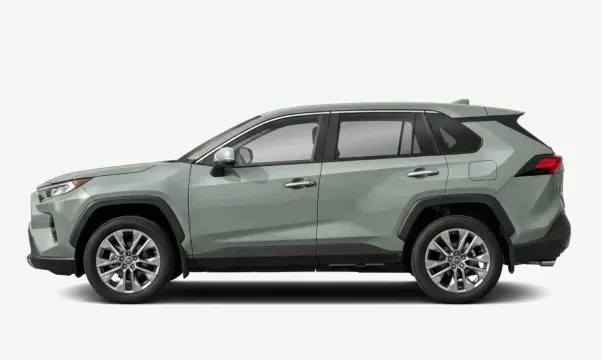
Toyota RAV4
Modern TNGA platform entry offering supreme utility options, 200 mm ground clearance, Dynamic Torque Vectoring AWD, and 21.0 km/L hybrid efficiency.
Highest ratedBest value
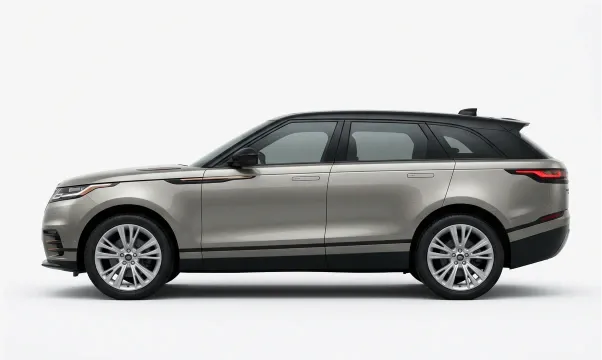
Toyota RAV4Range Rover Velar
Mandai score
9/10
7.5/10
Typical price
KSh 4,800,000
KSh 8,200,000
Years
2019-2023
2017-2023
Body type
Mid-size SUV
–
Fuel
Petrol, Hybrid
Petrol, Diesel, Plug-in hybrid
Transmission
Automatic, CVT
Automatic
Doors
5
5
Most popular trim
RAV4 2.0 Adventure / 2.5 Hybrid G / Limited E-Four
Velar P250 / D240 / P400e R-Dynamic HSE
Fuel and running cost
Trim
Fuel consumption
15.2 km/L6.6 L/100km combined · about 836 km a tank
13.2 km/L7.6 L/100km combined · about 1082 km a tank
Running cost
KSh 1,493 / 100 kmKSh 15 a km · KSh 14,932 for 1,000 km · petrol
KSh 1,719 / 100 kmKSh 17 a km · KSh 17,194 for 1,000 km · petrol
Dimensions
Length
4,600 mm (Adventure: 4,610 mm)
4,803 mm
Width
1,855 mm (Adventure: 1,865 mm)
1,930 mm
Height
1,685 mm
1,665 mm
Wheelbase
2,690 mm
2,874 mm
Ground clearance
200 mm
213 mm (251 mm Air)
Boot space
580 L (1,690 L folded)
673 L (1,731 L folded)
Kerb weight
1,570 kg (1,680 kg Hybrid)
1,875 kg
Seats
5
5
Specifications
Engine
2.0L M20A-FKS Dynamic Force / 2.5L A25A-FXS Hybrid
2.0L P250 Turbo Petrol / D240 Diesel / P400e PHEV
Power
171 hp (2.0L) / 222 hp combined (2.5L Hybrid E-Four)
250 hp (P250) / 240 hp (D240) / 404 hp (P400e)
Torque
207 Nm (2.0L) / 221 Nm (2.5L Hybrid)
365 Nm (P250) / 500 Nm (D240) / 640 Nm (P400e)
Drivetrain
Front-Wheel Drive / Dynamic Torque Vectoring AWD / E-Four
Intelligent Driveline Dynamics AWD
0–100 km/h
8.1 sec (2.5L Hybrid) / 9.5 sec (2.0L)
5.4 sec (P400e) – 7.1 sec (P250)
Top speed
200 km/h
217 km/h – 240 km/h
Fuel economy
Combined
15.2 km/L (2.0L Petrol) / 21.0 km/L (2.5L Hybrid)
13.2 km/L (P250) / 15.5 km/L (D240) / 45.0 km/L (P400e PHEV)
City
12.8 km/L (2.0L Petrol) / 20.0 km/L (2.5L Hybrid)
10.5 km/L (P250) / 13.0 km/L (D240) / 53 km EV range (P400e)
Highway
17.5 km/L (2.0L Petrol) / 22.0 km/L (2.5L Hybrid)
15.2 km/L (P250) / 17.5 km/L (D240) / 26.0 km/L (P400e)
Tank size
55 L
82 L (Petrol) / 60 L (Diesel) / 69 L (PHEV)
CO₂ emissions
138 g/km (2.0L) / 102 g/km (Hybrid)
154 g/km
At a glance
Model
Toyota RAV4 (XA50 Series)
Range Rover Velar (L560 Series)
Production years
2019–2023
2017–2023
Body type
5-Door Compact Utility Crossover
5-Door Luxury Crossover SUV
Seating capacity
5
5
Fuel types
Petrol (Dynamic Force), Full Hybrid (THS-II)
Petrol, Clean Diesel, PHEV
Engine sizes
1,986 cc (2.0L M20A-FKS) / 2,487 cc (2.5L A25A-FXS Hybrid)
1,997 cc (2.0L Petrol) / 1,999 cc (2.0L Diesel) / 2,996 cc (3.0L MHEV)
Transmission
Direct Shift-CVT / e-CVT
8-Speed Automatic
Drivetrain
FWD or Dynamic Torque Vectoring AWD / E-Four
Intelligent Driveline Dynamics AWD
Ground clearance
200 mm
213 mm (251 mm Air)
Source market
Japan / UK (RHD)
UK / Japan (RHD)
Pros and cons
What’s good
- Modern TNGA platform entry: Superior chassis rigidity, sharp handling, and excellent ride refinement on local roads.
- Sub-2,500 cc KRA duty advantage: All 2.0L Petrol and 2.5L Hybrid variants qualify for the lower 25% excise tax bracket.
- High 200 mm ground clearance: Easily clears deep potholes, tall speed bumps, and rough upcountry estate roads.
- 21.0 km/L hybrid efficiency: Exceptional fuel savings in heavy Nairobi bumper-to-bumper traffic jams.
- Stunning minimalist exterior design with flush door handles.
- Sub-2,000 cc tax bracket advantage across major engine lines.
- Cavernous 673 L cargo capacity.
What’s not so good
- High KRA CRSP customs valuation: Substantial import duty investment compared to earlier 4th-gen RAV4 models.
- Wind noise at high highway speeds: Minor cabin wind rustle around side mirrors over 120 km/h.
- Touchscreen controls require familiarization.
- Firm ride on 21-inch R-Dynamic alloy wheels.