
Compare cars
Pick up to 3 cars to see how they stack up on score, price and specs.
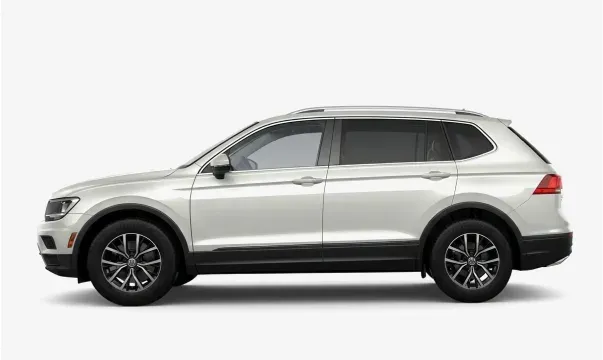
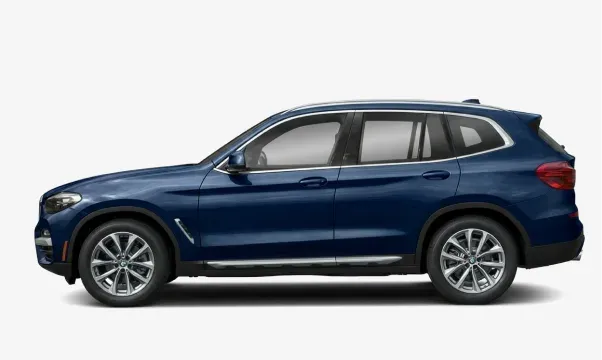
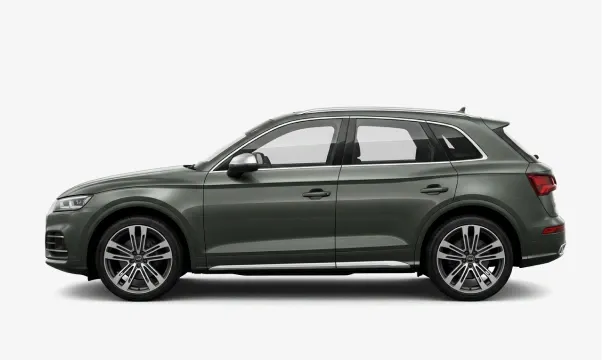
Volkswagen TiguanBMW X3Audi Q5
Mandai score
7.5/10
8/10
8.5/10
Typical price
KSh 4,800,000
KSh 4,900,000
KSh 4,800,000
Years
2017-2023
2017-2023
2017-2023
Body type
–
Mid-size SUV
–
Fuel
Petrol, Diesel
Petrol, Diesel, Plug-in hybrid
Petrol, Diesel
Transmission
Automatic, Dual-clutch
Automatic
Automatic
Doors
5
5
5
Most popular trim
Tiguan 1.4 TSI Highline / 2.0 TDI 4MOTION / Allspace 7-Seater
X3 xDrive20d M Sport / xDrive30i M Sport / xDrive30e PHEV
Q5 2.0 TFSI Quattro S Line
Fuel and running cost
Trim
Fuel consumption
15.5 km/L6.5 L/100km combined · about 899 km a tank
16.2 km/L6.2 L/100km combined · about 1102 km a tank
14.0 km/L7.1 L/100km combined · about 980 km a tank
Running cost
KSh 1,464 / 100 kmKSh 15 a km · KSh 14,643 for 1,000 km · petrol
KSh 1,406 / 100 kmKSh 14 a km · KSh 14,059 for 1,000 km · diesel
KSh 1,621 / 100 kmKSh 16 a km · KSh 16,211 for 1,000 km · petrol
Dimensions
Length
4,486 mm (Allspace: 4,701 mm)
4,708 mm
4,663 mm
Width
1,839 mm
1,891 mm
1,893 mm
Height
1,658 mm
1,676 mm
1,659 mm
Wheelbase
2,681 mm (Allspace: 2,787 mm)
2,864 mm
2,819 mm
Ground clearance
201 mm
204 mm
208 mm
Boot space
615 L (5-seater) / 760 L (Allspace 5-seat mode)
550 L (1,600 L folded; 450 L on xDrive30e PHEV)
550 L
Kerb weight
1,490 kg (1,680 kg 4MOTION)
1,750 kg (xDrive20d) / 1,990 kg (xDrive30e PHEV)
1,735 kg
Seats
5 or 7
5
5
Specifications
Engine
1.4L CZDA TSI / 2.0L EA888 TSI / 2.0L EA288 TDI Diesel
2.0L B47 Turbo Diesel / 2.0L B48 Turbo Petrol / 3.0L B58 Turbo Inline-6
2.0L TFSI Turbo Petrol (45 TFSI)
Power
150 hp (1.4T) / 190 hp (2.0T) / 150–190 hp (2.0 TDI)
190 hp (20d) / 252 hp (30i) / 292 hp combined (30e PHEV) / 382 hp (M40i)
252 hp @ 5,000–6,000 rpm
Torque
250 Nm (1.4T) / 320 Nm (2.0T) / 340–400 Nm (2.0 TDI)
400 Nm (20d) / 350 Nm (30i) / 420 Nm (30e PHEV) / 500 Nm (M40i)
370 Nm @ 1,600–4,500 rpm
Drivetrain
Front-Wheel Drive / 4MOTION All-Wheel Drive
Intelligent xDrive AWD
Quattro All-Wheel Drive with Ultra Technology
0–100 km/h
7.7 sec (2.0T) / 9.2 sec (1.4T) / 8.5 sec (2.0 TDI)
8.0 sec (20d) / 6.3 sec (30i) / 6.1 sec (30e PHEV) / 4.5 sec (M40i)
6.3 sec
Top speed
200 km/h
213 km/h – 250 km/h
237 km/h
Fuel economy
Combined
15.5 km/L (1.4T Petrol) / 13.0 km/L (2.0T Petrol) / 18.5 km/L (2.0 TDI)
16.2 km/L (xDrive20d) / 12.8 km/L (xDrive30i) / 41.0 km/L equiv. (xDrive30e) / 10.8 km/L (M40i)
14.0 km/L (2.0T Petrol) / 18.2 km/L (2.0T Diesel)
City
12.8 km/L (1.4T Petrol) / 10.5 km/L (2.0T Petrol) / 16.0 km/L (2.0 TDI)
13.8 km/L (xDrive20d) / 10.2 km/L (xDrive30i) / 45 km EV range (xDrive30e) / 8.5 km/L (M40i)
11.5 km/L (2.0T Petrol) / 15.5 km/L (2.0T Diesel)
Highway
17.8 km/L (1.4T Petrol) / 15.2 km/L (2.0T Petrol) / 20.5 km/L (2.0 TDI)
18.5 km/L (xDrive20d) / 15.0 km/L (xDrive30i) / 16.5 km/L hybrid mode (xDrive30e) / 12.8 km/L (M40i)
16.5 km/L (2.0T Petrol) / 20.5 km/L (2.0T Diesel)
Tank size
58 L (FWD) / 60 L (4MOTION)
68 L (50 L xDrive30e PHEV)
70 L
CO₂ emissions
149 g/km (1.4T) / 129 g/km (2.0 TDI)
138 g/km (20d) / 49 g/km (30e PHEV)
154 g/km
At a glance
Model
Toyota Tiguan / Tiguan Allspace (Mk2 Series)
BMW X3 (G01 Series)
Audi Q5 (FY Series)
Production years
2017–2023
2017–2023
2017–2023
Body type
5-Door Compact / 7-Seater Crossover SUV
5-Door Premium Compact Crossover
5-Door Executive Crossover SUV
Seating capacity
5 or 7 (Allspace)
5
5 seats
Fuel types
Petrol (TSI), Clean Diesel (TDI)
Clean Diesel, Petrol, Plug-In Hybrid (PHEV)
Petrol (TFSI), Clean Diesel (TDI)
Engine sizes
1,395 cc (1.4T) / 1,984 cc (2.0T) / 1,968 cc (2.0L TDI)
1,995 cc (2.0D) / 1,998 cc (2.0T / 2.0T PHEV) / 2,998 cc (3.0T M40i)
1,984 cc / 1,968 cc / 2,995 cc
Transmission
6/7-Speed DSG Dual-Clutch Automatic
8-Speed Steptronic Automatic
7-speed S tronic / 8-speed Tiptronic
Drivetrain
FWD or 4MOTION All-Wheel Drive
Intelligent xDrive AWD
Quattro All-Wheel Drive
Ground clearance
201 mm
204 mm
208 mm
Source market
UK / Japan (RHD)
UK / Japan / South Africa (RHD)
Japan / UK (RHD)
Pros and cons
What’s good
- Highly precise German engineering: Excellent chassis rigidity and high-speed highway composure.
- Sub-1,500 cc duty advantage on 1.4T TSI: Sits in KRA's lower customs duty tax valuation category.
- High 201 mm ground clearance: Easily clears deep potholes, tall speed bumps, and rough estate roads.
- Optional 7-seater Allspace layout: Provides third-row seating capacity with a huge 760 L trunk floor.
- Sub-2,000 cc KRA tax advantage: 2.0L diesel (20d), 2.0L petrol (30i), and 2.0L PHEV (30e) all qualify for KRA's 25% excise tax rate.
- 204 mm ground clearance: Confidently negotiates estate speed bumps, potholes, and unpaved upcountry roads.
- Practical 550 L boot space: Generous cargo capacity expanding to 1,600 L with 40:20:40 split rear seats.
- 16.2 km/L xDrive20d fuel efficiency: Ideal for long-distance highway travel (e.g. Nairobi to Mombasa or Kisumu).
- High 208 mm ground clearance: Easily clears deep potholes, tall speed bumps, and unpaved estate roads.
- Sub-2,500 cc duty advantage: 2.0L engines qualify for KRA's 25% excise duty rate.
- Quattro all-wheel drive traction: Instant torque distribution for wet asphalt and murram roads.
- Audi Virtual Cockpit & Bang & Olufsen audio: Premium 12.3-inch digital cluster and 3D sound system.
What’s not so good
- High CRSP customs valuation: Import taxes represent a solid investment compared to Japanese crossovers.
- Requires quality synthetic oils: DSG transmission requires fluid service every 60,000 km.
- Firm ride on 20-inch M Sport alloys over rough corrugated gravel tracks.
- Reduced boot floor height on xDrive30e PHEV (450 L) due to rear high-voltage battery placement.
- S tronic fluid service requirements: Demands genuine Audi dual-clutch fluid replacement every 60,000 km.
- Firm ride on 20-inch S Line wheels: Transmits minor road vibrations on corrugated gravel tracks.