
Compare cars
Pick up to 3 cars to see how they stack up on score, price and specs.
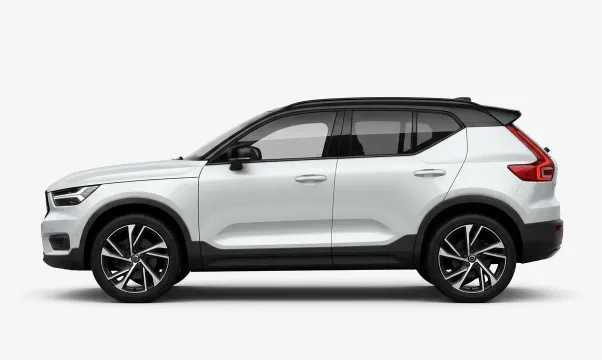
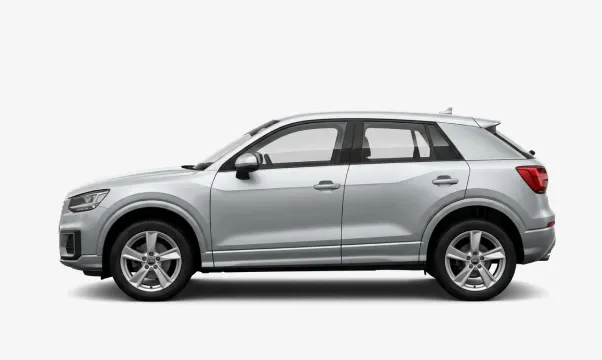
Volvo XC40Audi Q2
Mandai score
8.5/10
7/10
Typical price
KSh 5,200,000
KSh 2,900,000
Years
2018-2023
2017-2023
Fuel
Petrol, Diesel, Plug-in hybrid
Petrol, Diesel
Transmission
Automatic
Automatic
Doors
5
5
Most popular trim
XC40 T4 AWD R-Design / T5 AWD Inscription / Recharge PHEV
Q2 1.0 TFSI / 1.4 TFSI Sport
Fuel and running cost
Trim
Fuel consumption
13.5 km/L7.4 L/100km combined · about 729 km a tank
18.0 km/L5.6 L/100km combined · about 900 km a tank
Running cost
KSh 1,681 / 100 kmKSh 17 a km · KSh 16,812 for 1,000 km · petrol
KSh 1,261 / 100 kmKSh 13 a km · KSh 12,609 for 1,000 km · petrol
Dimensions
Length
4,425 mm
4,191 mm
Width
1,863 mm
1,794 mm
Height
1,652 mm
1,508 mm
Wheelbase
2,702 mm
2,601 mm
Ground clearance
211 mm
150 mm
Boot space
460 L (1,336 L folded)
405 L
Kerb weight
1,625 kg (1,810 kg Recharge PHEV)
1,280 kg
Seats
5
5
Specifications
Engine
2.0L T4 Turbo Petrol / 2.0L T5 Turbo Petrol / 1.5L T5 Recharge PHEV
1.4L TFSI Turbo Petrol (Cylinder on Demand)
Power
190 hp (T4) / 247 hp (T5) / 262 hp combined (Recharge PHEV)
150 hp @ 5,000 rpm
Torque
300 Nm (T4) / 350 Nm (T5) / 425 Nm combined (PHEV)
250 Nm @ 1,500–3,500 rpm
Drivetrain
Front-Wheel Drive / All-Wheel Drive
Front-Wheel Drive
0–100 km/h
6.5 sec (T5 AWD) / 7.3 sec (Recharge PHEV) / 8.4 sec (T4)
8.5 sec
Top speed
210 km/h
212 km/h
Fuel economy
Combined
14.8 km/L (T4 Petrol) / 13.5 km/L (T5 AWD) / 45.0 km/L equivalent (Recharge PHEV)
18.0 km/L (1.0T) / 16.5 km/L (1.4T)
City
12.0 km/L (T4 Petrol) / 11.0 km/L (T5 AWD) / 45 km pure EV range (PHEV)
15.0 km/L (1.0T) / 13.5 km/L (1.4T)
Highway
17.5 km/L (T4 Petrol) / 16.0 km/L (T5 AWD) / 22.0 km/L (PHEV hybrid mode)
21.0 km/L (1.0T) / 19.5 km/L (1.4T)
Tank size
54 L (Petrol) / 48 L (PHEV)
50 L
CO₂ emissions
154 g/km (T4) / 47 g/km (PHEV)
122 g/km
At a glance
Model
Volvo XC40 (CMA Platform)
Audi Q2 (GA Series)
Production years
2018–2023
2017–2023
Body type
5-Door Subcompact Lifestyle Luxury Crossover
5-Door Compact Urban Crossover
Seating capacity
5
5 seats
Fuel types
Petrol (Drive-E), Clean Diesel, PHEV
Petrol (TFSI), Clean Diesel (TDI)
Engine sizes
1,477 cc (1.5T PHEV) / 1,969 cc (2.0L T4/T5/D4)
999 cc / 1,395 cc / 1,498 cc / 1,968 cc
Transmission
8-Speed Geartronic Automatic / 7-Speed DCT (PHEV)
7-speed S tronic Dual-Clutch Automatic
Drivetrain
FWD or AWD
FWD or Quattro AWD
Ground clearance
211 mm
150 mm
Source market
UK / Japan (RHD)
Japan / UK (RHD)
Pros and cons
What’s good
- High 211 mm ground clearance: Easily clears tall speed bumps, deep potholes, and rough upcountry estate roads.
- Sub-2,000 cc KRA duty advantage: All 1.5T and 2.0L engines qualify for the lower 25% excise tax bracket.
- Extensive Scandinavian safety suite: Pilot Assist semi-autonomous driving, City Safety, and run-off road protection.
- Chic contrast-roof styling & clever storage: Removable trash bin, door slot laptop storage, and folding bag hooks.
- Sub-1,500 cc customs tax advantage: 1.0L and 1.4L/1.5L engines qualify for lowest KRA tax bracket.
- Premium Audi Virtual Cockpit: 12.3-inch digital instrument cluster with Google Maps navigation views.
- Excellent 16.5+ km/L fuel economy: Cylinder on Demand (CoD) tech deactivates 2 cylinders under light load.
- Compact urban agility: Easy maneuverability and parking in Nairobi CBD and Westlands.
What’s not so good
- High CRSP customs valuation: Import duty represents a solid investment compared to Japanese subcompact crossovers.
- Sensus touchscreen learning curve: Climate control operates via central touchscreen rather than physical buttons.
- 150 mm ground clearance: Requires cautious driving over tall estate speed bumps.
- S tronic dual-clutch sensitivity: Heavy stop-and-go traffic requires proper DSG fluid maintenance.