
Compare cars
Pick up to 3 cars to see how they stack up on score, price and specs.
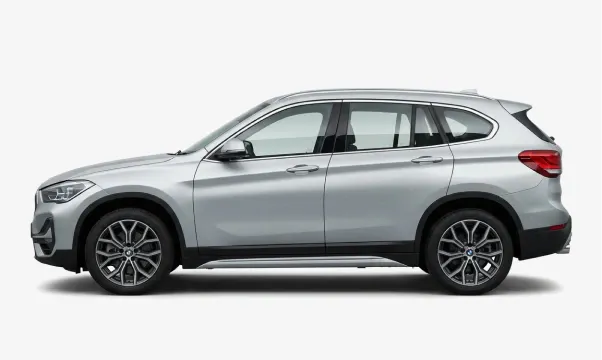
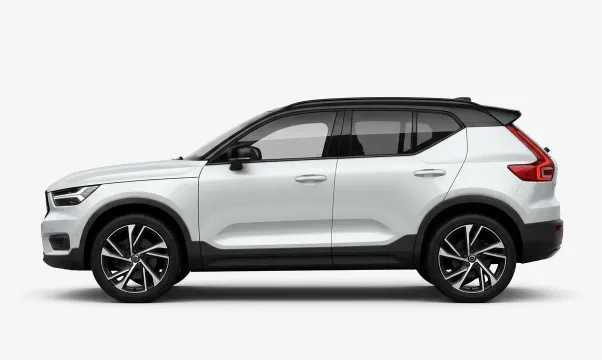
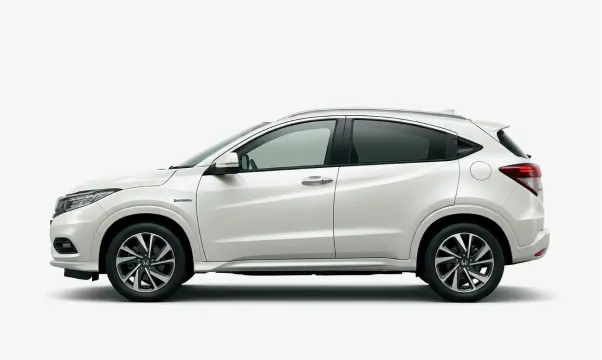
BMW X1Volvo XC40Honda Vezel Hybrid
Mandai score
8.5/10
8.5/10
8.5/10
Typical price
KSh 4,200,000
KSh 5,200,000
KSh 2,900,000
Years
2017-2023
2018-2023
2017-2023
Fuel
Petrol, Diesel, Hybrid
Petrol, Diesel, Plug-in hybrid
Hybrid
Transmission
Automatic, Dual-clutch
Automatic
Automatic
Doors
5
5
5
Most popular trim
X1 sDrive18i / sDrive18d / xDrive20d M Sport / xDrive25e PHEV
XC40 T4 AWD R-Design / T5 AWD Inscription / Recharge PHEV
Vezel Hybrid Z / RS / e:HEV
Fuel and running cost
Trim
1.5L SPORT HYBRID i-DCD
Fuel consumption
16.5 km/L6.1 L/100km combined · about 842 km a tank
13.5 km/L7.4 L/100km combined · about 729 km a tank
25.0 km/L4.0 L/100km combined · about 1000 km a tank
Running cost
KSh 1,376 / 100 kmKSh 14 a km · KSh 13,755 for 1,000 km · petrol
KSh 1,681 / 100 kmKSh 17 a km · KSh 16,812 for 1,000 km · petrol
KSh 908 / 100 kmKSh 9 a km · KSh 9,078 for 1,000 km · petrol
Dimensions
Length
4,447 mm (F48) / 4,500 mm (U11)
4,425 mm
4,330 mm
Width
1,821 mm (F48) / 1,845 mm (U11)
1,863 mm
1,770 mm
Height
1,598 mm (F48) / 1,642 mm (U11)
1,652 mm
1,605 mm
Wheelbase
2,670 mm (F48) / 2,692 mm (U11)
2,702 mm
2,610 mm
Ground clearance
183 mm (F48) / 205 mm (U11)
211 mm
170 mm (RU3) / 185 mm (RV5)
Boot space
505 L (F48) / 540 L (U11 - 1,550 L / 1,600 L folded)
460 L (1,336 L folded)
453 L (1,026 L with Magic Seats folded)
Kerb weight
1,430 kg (sDrive18i) / 1,680 kg (xDrive25e PHEV)
1,625 kg (1,810 kg Recharge PHEV)
1,310 kg
Seats
5
5
5
Specifications
Engine
1.5L B38 Turbo Petrol / 2.0L B47 Turbo Diesel / 2.0L B48 Turbo Petrol
2.0L T4 Turbo Petrol / 2.0L T5 Turbo Petrol / 1.5L T5 Recharge PHEV
1.5L LEB i-VTEC Petrol + Electric Motor
Power
136–140 hp (18i) / 150 hp (18d) / 192 hp (20i) / 190 hp (20d) / 220 hp (25e PHEV)
190 hp (T4) / 247 hp (T5) / 262 hp combined (Recharge PHEV)
152 hp combined system output
Torque
220 Nm (18i) / 350 Nm (18d) / 280 Nm (20i) / 400 Nm (20d) / 385 Nm (25e PHEV)
300 Nm (T4) / 350 Nm (T5) / 425 Nm combined (PHEV)
156 Nm engine + 160 Nm electric motor
Drivetrain
Front-Wheel Drive (sDrive) or Intelligent xDrive AWD
Front-Wheel Drive / All-Wheel Drive
Front-Wheel Drive
0–100 km/h
6.9 sec (25e PHEV) / 7.6 sec (20i) / 7.8 sec (20d) / 9.6 sec (18i)
6.5 sec (T5 AWD) / 7.3 sec (Recharge PHEV) / 8.4 sec (T4)
8.6 sec
Top speed
203 km/h – 225 km/h
210 km/h
180 km/h
Fuel economy
Combined
14.8 – 16.5 km/L (sDrive18i 1.5T) / 17.5 – 19.8 km/L (sDrive18d/xDrive20d 2.0D) / 35.0 km/L equivalent (xDrive25e PHEV)
14.8 km/L (T4 Petrol) / 13.5 km/L (T5 AWD) / 45.0 km/L equivalent (Recharge PHEV)
22.0–25.0 km/L
City
12.0 – 13.5 km/L (sDrive18i 1.5T) / 14.5 – 16.0 km/L (sDrive18d/xDrive20d 2.0D)
12.0 km/L (T4 Petrol) / 11.0 km/L (T5 AWD) / 45 km pure EV range (PHEV)
24.0 km/L
Highway
16.5 – 18.2 km/L (sDrive18i 1.5T) / 19.5 – 22.0 km/L (sDrive18d/xDrive20d 2.0D)
17.5 km/L (T4 Petrol) / 16.0 km/L (T5 AWD) / 22.0 km/L (PHEV hybrid mode)
21.0 km/L
Tank size
51 L (Petrol/Diesel) / 36 L (PHEV)
54 L (Petrol) / 48 L (PHEV)
40 L
CO₂ emissions
128 g/km (18i) / 133 g/km (20d) / 43 g/km (25e PHEV)
154 g/km (T4) / 47 g/km (PHEV)
105 g/km
At a glance
Model
BMW X1 (F48 Facelift & U11 Series)
Volvo XC40 (CMA Platform)
Honda Vezel Hybrid (RU3/RU4 & RV Series)
Production years
2017–2023
2018–2023
2017–2023
Body type
5-Door Premium Compact Crossover SUV
5-Door Subcompact Lifestyle Luxury Crossover
5-Door Compact Crossover SUV
Seating capacity
5
5
5
Fuel types
Clean Diesel, Petrol, Plug-In Hybrid (PHEV)
Petrol (Drive-E), Clean Diesel, PHEV
Full Hybrid (i-DCD / e:HEV)
Engine sizes
1,499 cc (1.5T 3-Cyl) / 1,995 cc (2.0D 4-Cyl) / 1,998 cc (2.0T 4-Cyl)
1,477 cc (1.5T PHEV) / 1,969 cc (2.0L T4/T5/D4)
1,496 cc
Transmission
7-Speed Steptronic Dual-Clutch / 8-Speed Automatic
8-Speed Geartronic Automatic / 7-Speed DCT (PHEV)
7-Speed Dual Clutch / e-CVT
Drivetrain
Front-Wheel Drive (sDrive) or Intelligent xDrive AWD
FWD or AWD
FWD or Real-Time AWD
Ground clearance
183 mm (F48) / 205 mm (U11)
211 mm
170 mm (RU3) / 185 mm (RV5)
Source market
UK / Japan (RHD JDM & UK Spec)
UK / Japan (RHD)
Japan (RHD)
Pros and cons
What’s good
- Sub-1,500 cc & sub-2,000 cc KRA tax advantage: 1.5L models qualify for lower customs duty valuation baseline.
- Exceptional 17.5–19.8 km/L diesel fuel economy: 2.0L B47 diesel delivers massive cruising range on highway trips.
- Practical 505 L cargo capacity: Generous boot space expanding to 1,550 L with 40:20:40 sliding rear seats.
- Elevated seating position & visibility: Easy entry/egress with high ground clearance (183–205 mm) to tackle speed bumps.
- High 211 mm ground clearance: Easily clears tall speed bumps, deep potholes, and rough upcountry estate roads.
- Sub-2,000 cc KRA duty advantage: All 1.5T and 2.0L engines qualify for the lower 25% excise tax bracket.
- Extensive Scandinavian safety suite: Pilot Assist semi-autonomous driving, City Safety, and run-off road protection.
- Chic contrast-roof styling & clever storage: Removable trash bin, door slot laptop storage, and folding bag hooks.
- Exceptional 22–25 km/L fuel economy: Advanced hybrid drive drastically cuts fuel costs in Nairobi traffic jams.
- Honda Magic Seats: Rear seats fold completely flat or flip upward to carry tall cargo like furniture.
- Sub-1,500 cc tax advantage: Qualifies for Kenya's lowest customs duty valuation category.
What’s not so good
- Firm suspension on M Sport 19-inch wheels over unpaved murram roads.
- Front-wheel-drive bias on sDrive models (lacks pure RWD BMW feel).
- High CRSP customs valuation: Import duty represents a solid investment compared to Japanese subcompact crossovers.
- Sensus touchscreen learning curve: Climate control operates via central touchscreen rather than physical buttons.
- i-DCD dual-clutch fluid sensitivity: Requires strict 40,000 km changes of specialized Honda Ultra DW-1 / ATF-TYPE 2.0 fluid.
- Hidden rear door handles: Exterior C-pillar handles can be unintuitive for first-time rear passengers.